

Hiring a kitchen remodeler is the easy part – deciding how far to take your renovation is where most homeowners get stuck. Should you tear everything down to the studs for a complete transformation, or can a targeted refresh deliver the results you need at a fraction of the cost? In Melbourne, FL, factors like humid climate conditions, local building codes, and neighborhood home values make this decision even more layered. Outdated designs can make kitchens feel unwelcoming, and inefficient layouts can hinder daily kitchen tasks. The good news: a qualified kitchen remodeling contractor can evaluate your home and steer you toward the option that fits your budget, lifestyle, and long-term plans.
What is a Full Kitchen Remodel?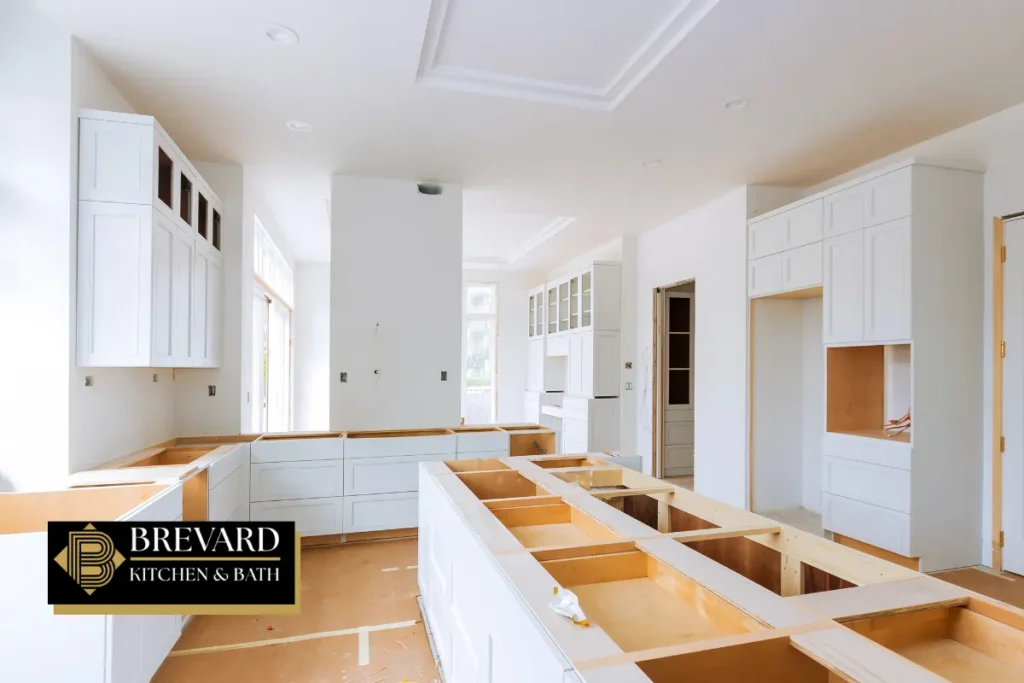
A full kitchen remodel involves tearing down to the studs and rebuilding the entire space from the ground up. This is a gut renovation in every sense – cabinets, flooring, walls, ceilings, countertops, and appliances are all removed. The existing layout is replaced with a complete redesign that may include moving walls, relocating plumbing lines, upgrading electrical panels, and repositioning appliances for better workflow.
A full kitchen remodel typically starts at $100,000, reflecting the scope of work involved. Structural modifications such as removing load-bearing walls require engineered plans and professional oversight. All electrical, plumbing, and mechanical work must comply with the Florida Building Code (7th Edition), which is enforced throughout Brevard County. Permitting is required for significant structural, electrical, or plumbing changes in kitchen remodels, and the City of Melbourne’s Building Section reviews plans before any work begins.
Full remodels can significantly increase home value compared to partial updates. They also allow for major layout changes – think opening a closed-off kitchen into the dining area, adding an island with a sink, or creating dedicated storage zones that older cabinets simply cannot accommodate. A full remodel can address outdated appliances and fixtures while correcting fundamental problems like aging plumbing, insufficient electrical capacity, or water damage hidden behind walls.
A full remodel can take several weeks or months to complete. In Melbourne, timelines commonly run six to twelve weeks once materials arrive, depending on complexity, permit review periods, and inspection scheduling.
What is a Partial Kitchen Update?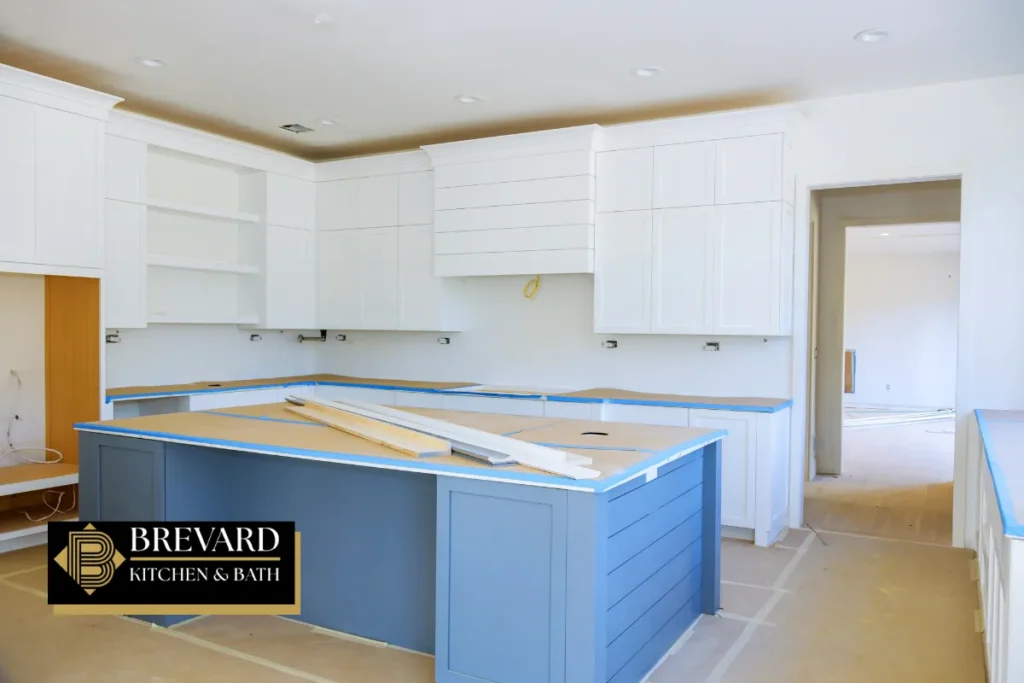
A partial kitchen renovation is a budget-friendly alternative that focuses on cosmetic updates without altering the structural framework of your space. The existing layout stays intact. No walls come down, no plumbing gets rerouted, and no major electrical work is required.
Common improvements in a kitchen refresh include cabinet refacing, replacing hardware and door style options, installing new countertops in granite or quartz, adding a modern backsplash in tile, and swapping out light fixtures for updated lighting design. New appliances can be installed in their current positions, and new flooring – such as waterproof luxury vinyl plank or porcelain tile suited to Florida homes – gives the room a fresh foundation.
Partial renovations complete faster, causing less disruption to homeowners. Most projects wrap up in two to four weeks. Your kitchen often remains partially usable throughout the process, and the lower cost makes this path accessible for homeowners who want a visually appealing upgrade without the financial commitment of a full renovation.
However, limited design changes are possible with a partial kitchen renovation. If your current kitchen suffers from a cramped work triangle, poor traffic flow, or fundamentally flawed cabinet layout, surface-level changes will not solve those problems. Partial renovations cannot address underlying structural issues, and they carry a lower impact on resale value compared to a complete overhaul.
Key Factors a Kitchen Remodeler Evaluates
A professional kitchen contractor does not simply quote a price and start swinging a hammer. Before recommending a full remodel or a partial update, they conduct a thorough assessment of your home, your goals, and the realities of your property. Here is what that evaluation covers.
Budget and Return on Investment
Cost is usually the first conversation. In Melbourne, cosmetic refreshes typically range from $8,000 to $18,000, while mid-range kitchen remodeling projects – including new cabinets, countertops, flooring, and appliances – fall between $35,000 and $65,000. A full kitchen renovation with structural changes runs $65,000 to $110,000 or more, depending on materials and scope.
Full remodels require more extensive financial investment and time. But the return matters just as much as the spend. Minor remodels tend to recoup approximately 96% of their cost at resale, making them exceptionally efficient from an ROI perspective. Major or luxury renovations, on the other hand, typically recover only 40–60% of the investment – especially if the finished kitchen exceeds the price expectations of the surrounding neighborhood.
With a median home value of roughly $269,561 in Melbourne, a kitchen remodeling contractor can help you understand where to allocate your budget for maximum impact. They will also build in a contingency of 10–20% for unexpected discoveries like mold, termite damage, or outdated wiring – issues that frequently surface mid project during demolition.
Current Layout and Functionality
Kitchen layouts should facilitate efficient workflow for cooking and accessing appliances. If your current layout forces you to walk across the room to reach the refrigerator after pulling something from the sink, you have a workflow problem that no amount of new hardware or paint can fix. Inefficient kitchen layouts can necessitate a full remodel.
A remodeler evaluates the classic work triangle – the relationship between sink, stove, and refrigerator – and assesses traffic flow, clearance around islands or peninsulas, and how many people typically use the kitchen at once. They consider your cooking habits and lifestyle: whether your family gathers in the kitchen for daily meals, whether you entertain frequently, and whether features like a pot filler, wine storage, or expanded prep space would improve your daily functionality.
Appliance relocation is possible during a full remodel but adds plumbing, gas, and electrical costs. If your existing layout already works reasonably well, a partial update with upgraded finishes and fixtures may deliver everything you need.
Condition of Existing Components
The condition of existing cabinet boxes influences whether a full remodel or a partial update is suitable. Solid plywood cabinet boxes with sound construction can support refacing – new doors, drawer fronts, and hardware – at a fraction of replacement cost. Older cabinets may struggle with modern storage needs, and if the boxes are particle board with water damage or failed joints, refacing becomes a temporary fix on a deteriorating foundation. Damaged cabinets can create safety hazards and affect usability.
Beyond cabinetry, a kitchen contractor inspects plumbing pipes for corrosion or outdated materials, checks electrical panel capacity and the presence of GFCI outlets, and evaluates flooring for moisture damage, levelness, and subfloor integrity. Moisture-resistant materials are essential in humid climates for kitchen renovations – a critical consideration in Melbourne’s subtropical environment where humidity accelerates deterioration of improperly protected surfaces.
Aging appliances can lead to poor performance and safety issues. If your dishwasher, range, or refrigerator is nearing end of life, a remodeler factors replacement into the overall plan and ensures proper installation with appropriate utility connections.
Read What Kitchen Features to Upgrade Together: Insights from a Kitchen Remodeler in Melbourne, FL
How Professional Kitchen Remodelers Guide Your Decision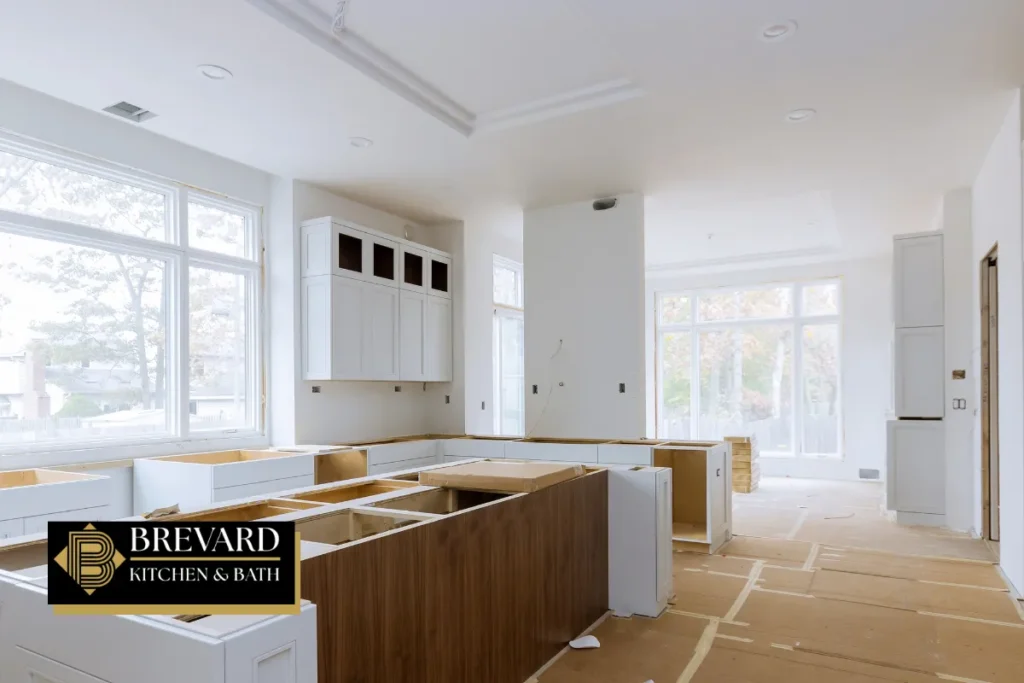
The value of working with a local kitchen remodeling contractor extends far beyond labor. Local professionals understand regional building codes and environmental factors during kitchen renovations. In Melbourne, any work involving plumbing, electrical, gas, or structural modifications triggers a permit requirement through the City’s Building Section. Cosmetic-only work on a single-family dwelling may be exempt under certain thresholds, but a remodeler knows exactly where those lines fall – and ensures your project stays compliant.
Design experience translates directly into a more functional finished kitchen. Remodelers propose space optimization strategies, lighting design plans that layer task and ambient illumination, and material selections that withstand the demands of Florida’s climate. They create realistic timelines: simple residential construction permits in Melbourne average five to seven working days for approval, while permit fees for moderate remodels range from approximately $180 to $1,080, depending on scope.
Accurate cost estimation prevents budget surprises. A remodeler provides line-item breakdowns – demolition, cabinetry, countertops, labor, permits, inspections, finish work – so you see exactly where every dollar goes. They also maintain relationships with trusted plumbers, electricians, and custom fabricators throughout Brevard County, giving you access to skilled subcontractors and quality materials without the guesswork of vetting them yourself.
Underlying infrastructure issues may necessitate a full remodel instead of a partial update, and only a thorough professional assessment can reveal what is hiding behind your walls, under your flooring, or inside your plumbing system.
Timeline and Project Management Differences
Understanding how long your kitchen will be out of commission helps you plan – and often influences the decision itself.
A full kitchen renovation moves through distinct phases:
- Design, planning, and permits – Layout finalization, material selection, and permit submission through Melbourne’s online system.
- Demolition – Removal of existing cabinets, flooring, walls, and fixtures.
- Rough-in work – Structural framing, electrical wiring, and plumbing relocation.
- Installation – New cabinets, countertops, flooring, and appliances.
- Finish work – Backsplash, hardware, fixtures, paint, and final details.
- Inspections and cleanup – Required inspections for framing, electrical, plumbing, and final sign-off.
This process commonly takes six to twelve weeks in Melbourne once materials arrive. Custom cabinetry orders can add significant lead time. During construction, most homeowners set up a temporary kitchen with a microwave, compact refrigerator, and portable countertop in another room.
Partial renovations are faster and less disruptive than full remodels. A kitchen refresh typically wraps in two to four weeks, and the kitchen often remains partially functional throughout. Fewer trades are involved, fewer inspections are required, and the permitting process is simpler – or may not be needed at all for purely cosmetic updates.
Making the Right Choice for Your Melbourne Home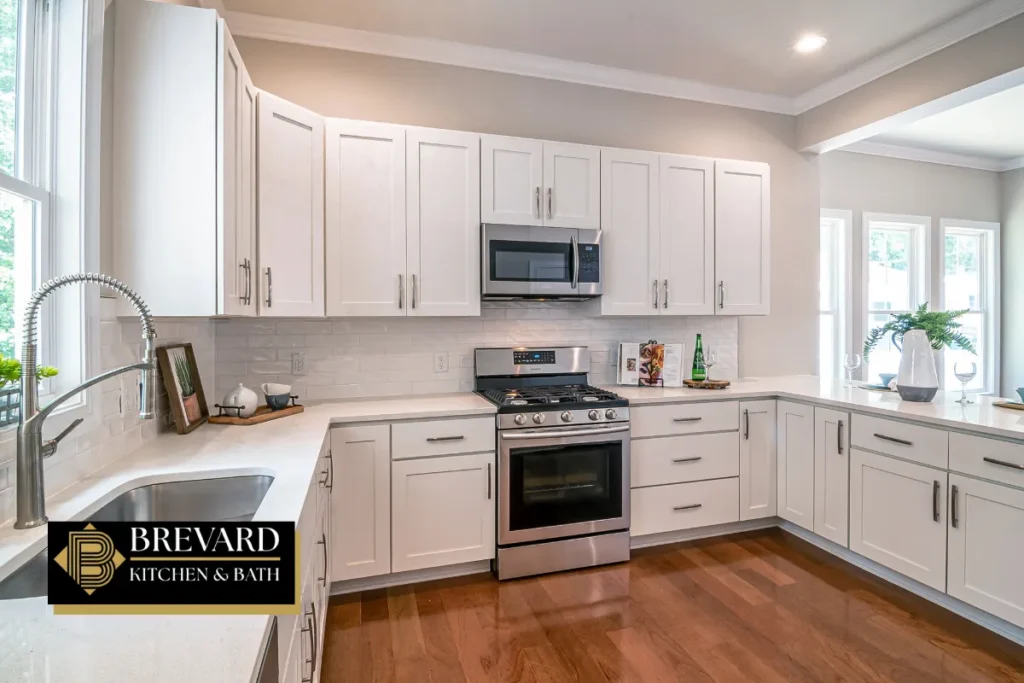
The decision between a full remodel and a partial update comes down to a handful of honest questions:
- How long do you plan to stay? If you are living in your house for the next decade or more, a full remodel delivers long-term comfort tailored to how your family actually uses the space. If you are planning to sell within a few years, a well-executed partial update often provides stronger percentage returns on your investment.
- Does your current layout work? If the flow, storage, and workspace function well, cosmetic updates can make a dramatic visual difference without the cost and disruption of moving walls or rerouting utilities. Lack of storage space can complicate kitchen organization, and if that problem is rooted in the cabinet layout itself, surface changes will not solve it.
- What is the condition of your infrastructure? Outdated plumbing, insufficient electrical capacity, or water-damaged subfloors are problems that a partial renovation simply covers up. A complete redesign addresses these issues at their source.
- What does your neighborhood support? In Melbourne’s real estate market, home equity gains from kitchen remodels average roughly $24,459 – about 9.1% of home value. But over-improving beyond what comparable homes in your area sell for reduces your return. A remodeler familiar with local property values helps you invest wisely.
Homeowners choose based on a combination of budget, condition, goals, and timeline. There is no universally correct answer – only the one that fits your situation.
Kitchen Remodeler in Melbourne, FL – Brevard Kitchen and Bath
We are Brevard Kitchen and Bath, and we help homeowners across Melbourne and Brevard County turn their kitchen ideas into reality. Whether you need a cosmetic kitchen refresh or a full gut renovation, our team evaluates your space, your budget, and your goals to recommend the right path forward.
We handle every phase of your kitchen project – from initial design and material selection to proper installation and final walkthrough. Our experience with local building codes, permitting, and the unique demands of Florida homes means your project stays on track and fully compliant.
Ready to make an informed decision about your own kitchen? Call us at (844) 965-1213 or fill out our contact form to schedule a consultation. Let us show you why Melbourne homeowners trust Brevard Kitchen and Bath to deliver an amazing job, every time.
Frequently Asked Questions
Can I start with a partial update and convert to a full remodel later?
Yes, phasing your kitchen renovation is a practical approach for homeowners who want improvements now but plan a larger project down the road. You might begin with new countertops, updated fixtures, and fresh paint, then tackle a full remodel in a few years when your budget allows. However, keep in mind that some work completed during the partial update – like new flooring or a backsplash – may need to be removed during a future gut renovation. Discuss phasing with your kitchen contractor upfront so materials and design choices made today do not conflict with your long-term plan for the space.
How do I know if my kitchen needs new plumbing or electrical work?
Warning signs include slow drains, low water pressure, discolored water, frequently tripping breakers, outlets that do not work, or a lack of GFCI protection near water sources. Homes built before the 1980s in Melbourne may have outdated wiring or galvanized pipes that no longer meet current code requirements. A kitchen remodeling contractor can perform a pre-renovation inspection to identify these issues before you commit to a scope of work. If significant electrical or plumbing upgrades are needed, a partial update may not be sufficient – and addressing these systems early prevents costly surprises during construction.
What kitchen materials hold up best in Melbourne’s humid climate?
Humidity is a constant factor in this region, and material selection should reflect that. For flooring, waterproof luxury vinyl plank and porcelain tile outperform solid hardwood, which can warp or buckle in moisture-heavy environments. Quartz countertops resist moisture better than some natural stone options that require regular sealing. For cabinetry, plywood construction with moisture-resistant finishes holds up significantly longer than particle board alternatives. Stainless steel or composite sink basins resist corrosion. Your contractor should recommend materials specifically tested for performance in subtropical conditions, ensuring your investment lasts well beyond the initial installation.
What permits does a kitchen renovation require in Melbourne, FL?
Any kitchen project involving structural modifications, plumbing changes, electrical work, or gas line alterations requires a permit through the City of Melbourne’s Building Section. Permit fees for moderate residential remodels typically range from $180 to $1,080. Cosmetic-only work on a single-family dwelling may qualify for exemption if it stays below certain cost thresholds and does not involve regulated trades. Skipping required permits can result in fines, failed inspections, and complications when you sell your home. Your remodeler should handle permit applications, plan submissions, and all required inspections as part of the project scope.
How do I set a realistic budget for my kitchen project in Melbourne?
Start by defining your priorities – whether that is upgraded appliances, better storage, improved layout, or simply a more modern look. Cosmetic refreshes in this market typically cost $8,000 to $18,000, mid-range remodels fall between $35,000 and $65,000, and a full kitchen remodel typically starts at $100,000. Always include a contingency of 10–20% for unexpected issues discovered during demolition, such as hidden water damage or code deficiencies. A kitchen contractor can provide a detailed line-item estimate that breaks down costs by trade and material, helping you see exactly where your money goes and where adjustments can be made.
Disclaimer: This article provides general information about kitchen renovation options in Melbourne, FL. Costs, timelines, permit requirements, and code standards may vary based on project scope and current regulations. Consult a licensed contractor for guidance specific to your home.
Read How to Plan a Kitchen Remodel from Start to Finish with a Kitchen Remodeler in Melbourne, FL