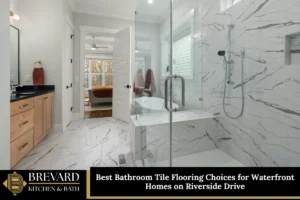

Porcelain vs. Ceramic in Showers: A Melbourne Installer’s Short Answer
Any experienced flooring installer will tell you that the tile you choose for your shower can make or break the room. Many homeowners in Melbourne, Florida face the same dilemma: porcelain or ceramic? Pick the wrong material for wet areas and you risk cracked tiles, persistent mildew, and costly repairs within just a few years. The humid, coastal climate here only raises the stakes. Porcelain tile is generally the stronger choice for shower floors and high-splash zones because it is denser, absorbs almost no water, and holds up under daily use. Ceramic tile, meanwhile, can still perform well on shower walls where standing water is not an issue. Understanding the difference between these materials, and pairing either with proper waterproofing, is the real solution for a shower that lasts.
Key Takeaways
- Porcelain tile is usually the better choice for shower floors in Melbourne, FL because it absorbs less than 0.5% water, resists mold, and handles constant moisture without breaking down.
- Ceramic tile can still be a smart, budget-friendly option for shower walls and decorative accents where water does not pool.
- Proper waterproofing and professional installation matter more than tile type alone when it comes to preventing leaks and long term performance.
- Combining porcelain on the floor with ceramic on the walls often delivers the best balance of safety, durability, cost, and style.
- Always confirm that your flooring contractor follows local building code requirements for backer boards, waterproofing membranes, and minimum tile heights in wet areas.
What Really Makes Porcelain Tile Different from Ceramic Tile
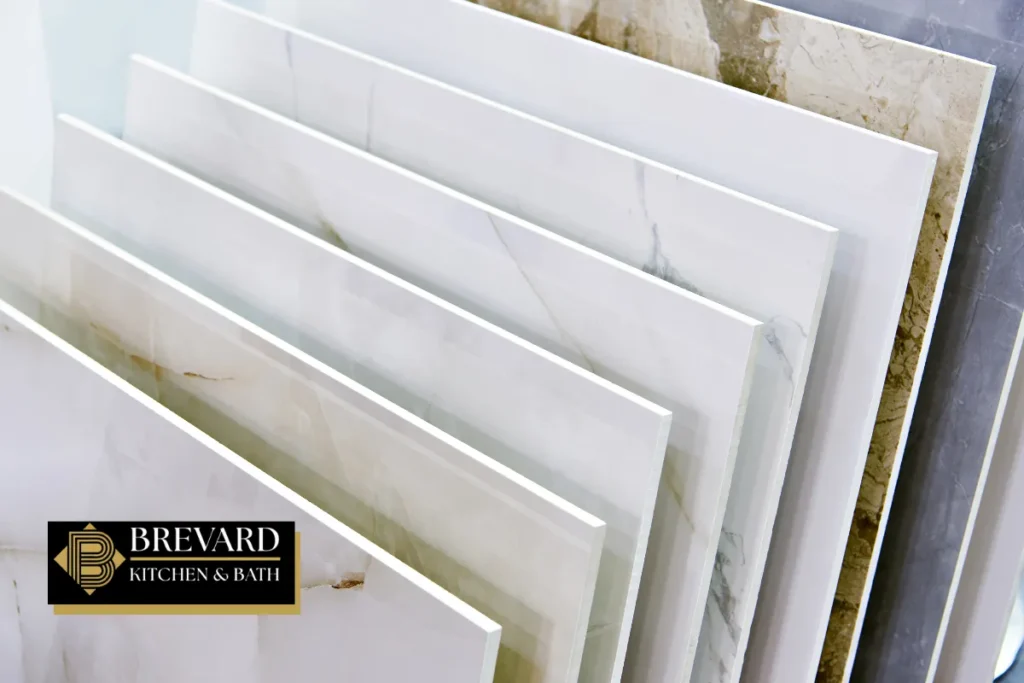
Both porcelain and ceramic are fired clay products, so it is common to hear them lumped together. The real difference comes down to manufacturing. Porcelain tile is made from refined clay mixed with feldspars and silica, then pressed and fired at significantly higher temperatures. The result is a denser, harder body that porcelain absorbs less than 0.5% water through, earning it an impervious classification under industry standards. Porcelain is denser and more durable than ceramic tile across nearly every measurable category.
Ceramic tile is softer and easier to cut than porcelain, which makes it appealing for certain applications. However, ceramic tile relies on its glaze for moisture protection. If that glaze chips or wears through, the more porous body underneath is exposed. Ceramic tile can absorb between 3% and 7% water depending on its grade.
Key differences at a glance:
- Density: porcelain is fired hotter and pressed harder, creating a nearly waterproof body
- Porosity: porcelain absorbs less than 0.5% water; ceramic absorbs significantly more
- Hardness: porcelain rates higher on abrasion scales (PEI IV–V vs. I–III for most ceramic)
- Cutting difficulty: the density of porcelain makes it harder to cut, requiring specialized tools
- Surface protection: ceramic depends heavily on its glaze; through-body porcelain hides chips better
How Melbourne, FL’s Climate Affects Your Shower Tile Choice
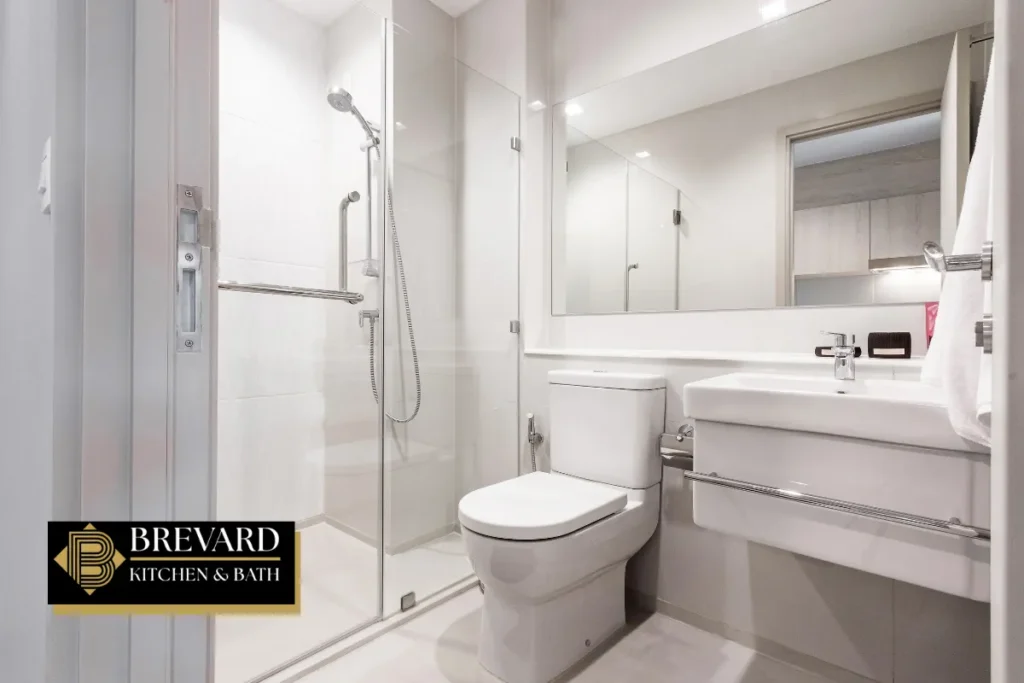
Melbourne sits on the Space Coast with average humidity levels that regularly exceed 70%. Combine frequent afternoon storms with warm temperatures and air-conditioned interiors, and you get constant moisture cycling in bathrooms. Steam from hot showers lingers, and many older homes have limited exhaust ventilation.
This shower environment increases the risk of mold growth behind tile if materials or installation fall short. Porcelain tile is naturally resistant to mold and mildew because its near-zero porosity prevents moisture from penetrating the tile body. That makes it a practical choice for shower floors, niches, and benches that stay damp between uses. Ceramic tile can still perform on walls in wet environments when paired with a continuous waterproofing membrane and adequate bathroom ventilation.
Local building codes require cement backer board or an approved equivalent behind tile in showers, along with proper waterproofing. Homeowners should verify that their flooring contractor follows these requirements before any work begins.
Porcelain vs. Ceramic for Shower Walls: When Each Makes Sense
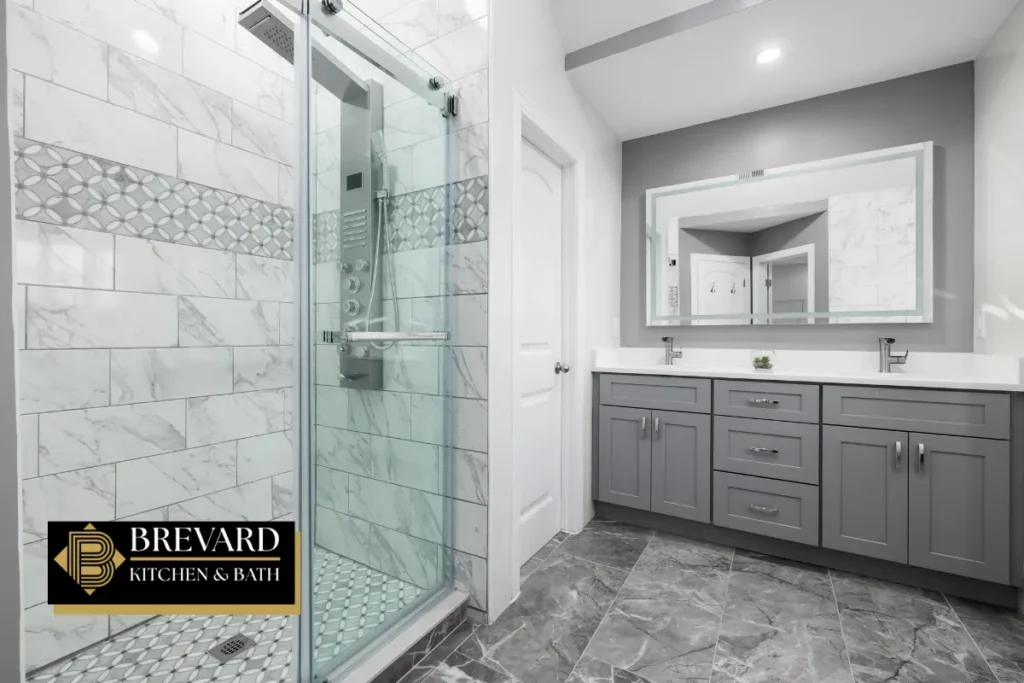
Shower walls do not deal with standing water the way floors do, so design preferences and budget carry more weight here. That said, the wall assembly still needs to resist moisture from daily splashing and steam.
Porcelain tile on shower walls offers consistent through-body color, excellent water resistance, and durability that suits busy households and rental properties. Large format porcelain panels reduce grout lines and create a sleek, modern look, though they are heavier and more demanding to install on vertical surfaces.
Quality glazed ceramic tile can be used on vertical shower walls where water does not pool. Ceramic tile is lighter and easier to cut than porcelain tile, which simplifies trimming around niches, valves, and corners. Ceramic tile offers a wide range of colors and styles, making it appealing for aesthetic applications such as decorative accents, feature walls, or a traditional brick pattern layout.
A practical compromise that many homeowners choose is porcelain in the main splash zone and glazed ceramic for upper walls or decorative areas. This balances elegance with cost savings without sacrificing performance in the wettest spots.
Why Porcelain Is Usually the Best Tile for Shower Floors
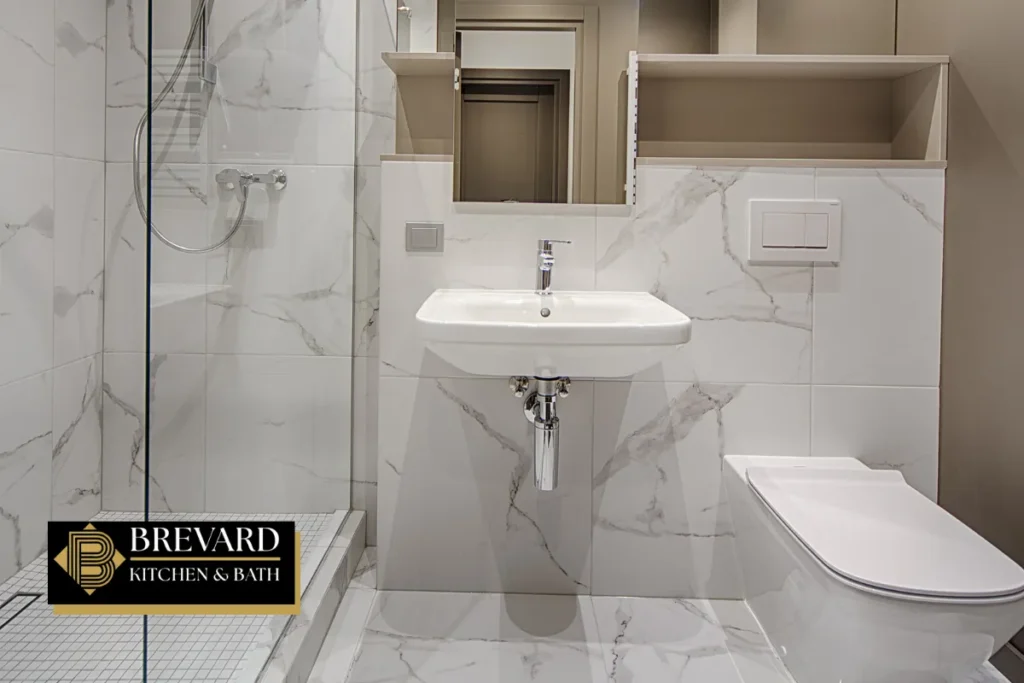
Shower floors are the most demanding surface in any bathroom. They hold water, bear foot traffic, collect soap scum, and must slope precisely toward the drain at a minimum of one-quarter inch per foot. Material choice here directly affects safety, durability, and maintenance for years to come.
Porcelain tile is ideal for high-moisture areas like showers because its dense body and low absorption handle constant water exposure without degrading. It is highly resistant to staining, chipping, and scratching, which matters on a surface that gets scrubbed and walked on daily. Porcelain tile is also naturally mold- and mildew-resistant, reducing the risk of discoloration between cleanings.
For slip resistance, choose matte or textured porcelain with a wet dynamic coefficient of friction suitable for barefoot conditions. Small-format porcelain mosaics provide natural traction for shower floors and conform better to compound slopes around drains. Porcelain tile can be manufactured to meet slip-resistance standards, so ask your flooring store to confirm the rated traction specs before purchasing.
Avoid polished or glossy tiles on shower floors regardless of material. They become dangerously slippery when wet. Porcelain tile is available in various large-format and realistic designs such as stone and wood looks, but reserve those finishes for walls or dry floors where beauty and safety do not conflict.
Read What Are the Benefits of LVP in a Bathroom? Insights from a Flooring Installer in Melbourne, FL
Grout Lines, Sealing, and Everyday Maintenance in a Shower
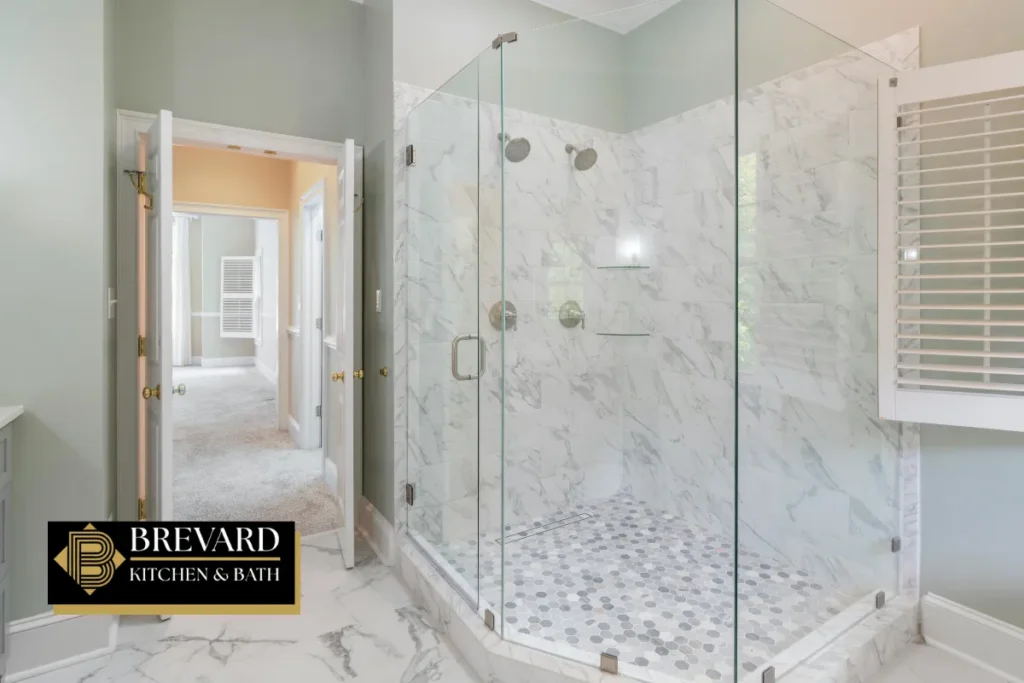
Tile type is only half the equation in a shower. Grout lines and caulk joints are where most ongoing maintenance lives, and neglecting them leads to mildew, staining, and eventual moisture intrusion behind the tile.
Porcelain tile requires minimal maintenance due to its low porosity. The tile surface itself is naturally resistant to staining and does not need periodic sealing. However, polished porcelain requires a one-time penetrating sealer before grouting to prevent grout haze from bonding to the surface.
Both porcelain and ceramic tile installations depend on properly sealed grout to stay clean and watertight. Grout should be sealed every 6 to 12 months depending on usage and grout type. Epoxy grout is more resistant to mildew and staining but costs more upfront.
For daily care, use a mild cleaner and warm water rather than harsh chemicals that can degrade grout or strip sealers. Squeegeeing tile and glass after each shower reduces soap scum buildup and keeps the space looking fresh. Choosing larger tiles, especially large format porcelain on walls, means fewer grout lines and less scrubbing over time, which contributes to genuinely low maintenance living.
Cost, Value, and Long-Term Performance in a Shower Remodel
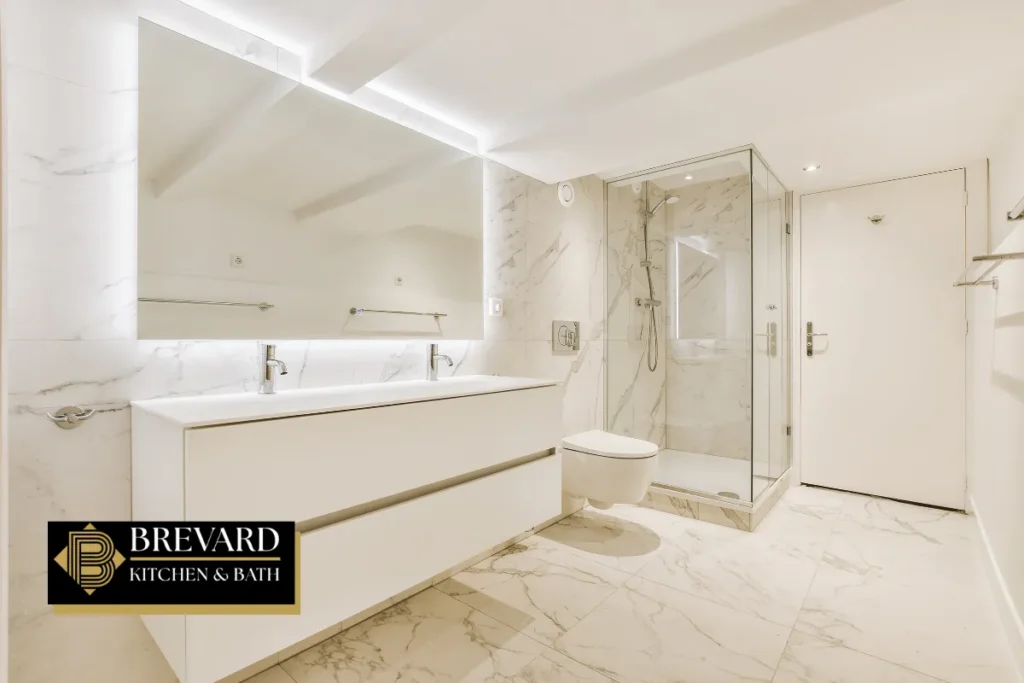
Porcelain tile costs more per square foot than ceramic, and installation of porcelain tile is more expensive than ceramic as well. Porcelain requires specialized tools for installation, increasing labor costs, and porcelain’s density leads to higher installation labor time for cutting and fitting. Substrate preparation, waterproofing systems, and details like niches, benches, and shower pans add to the total.
Ceramic tile tends to be less expensive than porcelain and is often more budget-friendly for bathroom renovations, especially on walls where the performance gap narrows. A well-installed glazed ceramic wall can look stunning and last for decades with proper care.
However, long term performance favors porcelain in wet areas. Fewer repairs, stronger resistance to moisture damage, and a durable surface that does not fade or scratch easily add up to real value over a 15- to 25-year lifespan. For homeowners planning to age in place or keep their home long-term, the higher upfront cost of a porcelain shower floor is often the smarter investment.
Do-It-Yourself vs. Professional Installation in Melbourne, FL
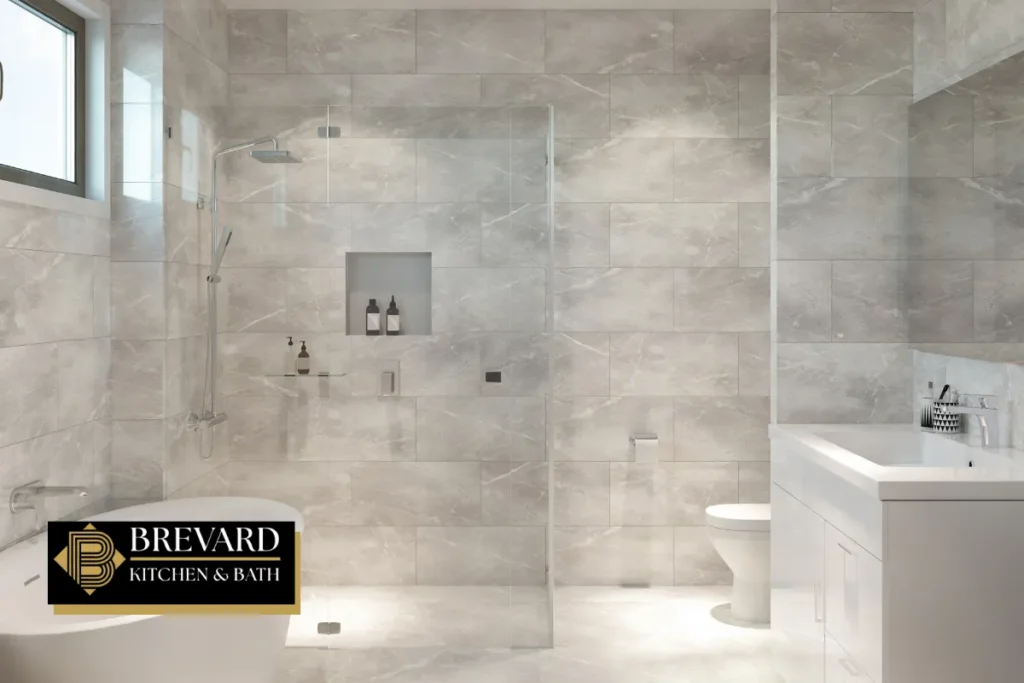
Some homeowners consider tackling a shower remodel themselves, and while DIY tile on a backsplash or dry floor can work, showers are unforgiving. A single missed detail in waterproofing or slope can cause hidden leaks, structural rot, and mold inside wall cavities.
Reasons to choose professional installation:
- Proper waterproofing membrane application with sealed seams at every corner and penetration
- Correct slope on shower pans to prevent pooling
- Code-compliant cement backer board and wall assembly
- Expansion joints and movement accommodations that prevent cracking
- Accurate cuts on dense porcelain, especially around drains, valves, and fixtures
Porcelain tile installations are best handled by professionals because the material demands precision. Porcelain tile requires a quality thin-set mortar formulated for dense, low-absorption tile, and standard adhesives may not bond properly. The waterproofing system behind tiles is important for ensuring a shower is waterproof regardless of tile type. A licensed flooring installer reduces the risk of failures that cost far more to fix than the original installation labor.
Before hiring anyone, ask for specifics: what waterproofing materials will be used, what type of grout, and what warranty terms are included.
Putting It All Together: How to Choose the Best Tile for Your Shower
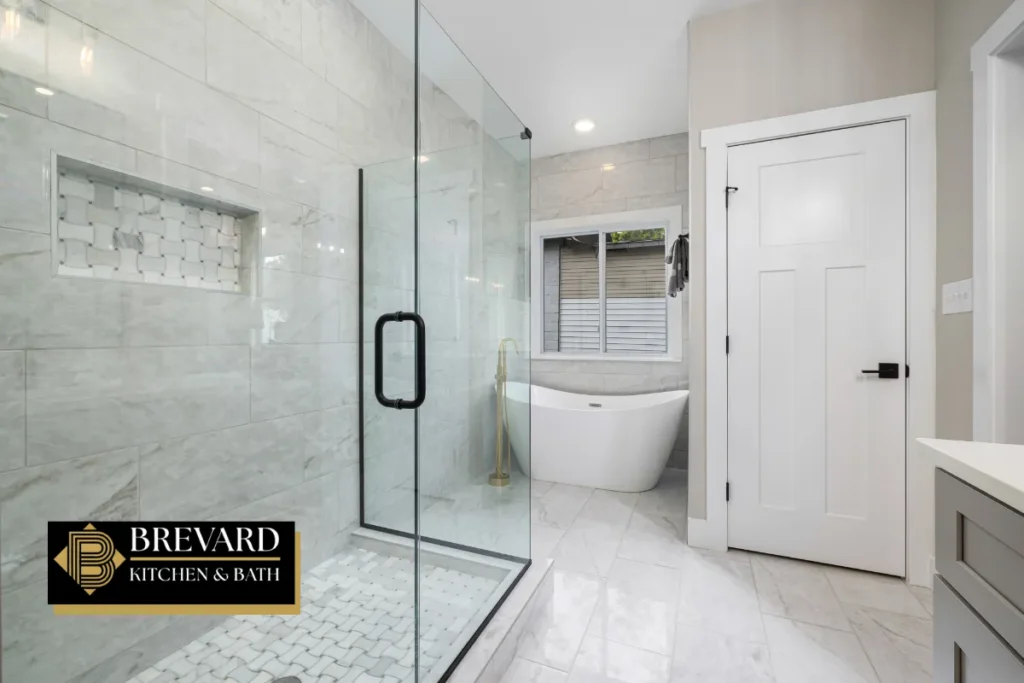
Choosing the right tile does not have to be overwhelming. Here is a straightforward framework:
- Set your budget for materials and installation labor
- Select porcelain tile for shower floors, curbs, and benches where water exposure is constant
- Decide whether porcelain or ceramic tile best fits your shower walls based on budget, style, and design goals
- Pick a finish: matte or textured porcelain for floors, and whatever patterns or colors suit your space on walls
- Confirm waterproofing details, grout type, and installation timeline with your contractor
Balance aesthetics with practical needs. Slip resistance, low maintenance, and warmth underfoot matter just as much as color and elegance. Porcelain is usually the best tile for floors and wet rooms, while ceramic can still create a stylish, quality finish on walls when selected thoughtfully.
If you are planning a shower remodel, speaking with a knowledgeable local flooring contractor in Melbourne, FL is the fastest way to get recommendations tailored to your bathroom, your home, and your budget.
Flooring Installer in Melbourne, FL – Brevard Kitchen and Bath

At Brevard Kitchen and Bath, we are a trusted flooring installer based in Melbourne, Florida, and we specialize in shower remodel projects using porcelain and ceramic tile. Our team walks homeowners through every decision, from comparing quality flooring products for shower floors and shower walls to selecting the right grout, countertops, and fixtures that complete the room.
We handle professional installation with code-compliant waterproofing, properly prepared substrates, and materials suited to the demands of our local climate. Whether you need help choosing between natural stone looks, textured porcelain, or a budget-friendly ceramic wall, we are here to guide you.
Call us at (844) 965-1213 or fill out our contact form to schedule a consultation. Let Brevard Kitchen and Bath help you create a shower that is safe, durable, and built to last.
Frequently Asked Questions
Can I Mix Porcelain and Ceramic Tile in the Same Shower?
Yes, mixing porcelain on the floor with ceramic on the walls is a common and effective approach. The key is reserving porcelain or another slip-resistant, low-absorption tile for the shower floor and any horizontal surfaces that hold water. On walls, glazed ceramic provides design flexibility at a lower price point. To keep the finished look cohesive, use color-matched grout and consistent joint widths across both materials. Pay attention to tile thickness and edge profiles so trim pieces and transitions between the two materials finish cleanly without awkward steps. A professional layout plan helps avoid mismatched grout lines or water-trapping details in corners and niches that could lead to moisture issues over time.
What Tile Size Works Best in a Small Melbourne Bathroom Shower?
For shower floors in compact bathrooms, smaller tiles or mosaics in the 2×2 or 3×3 inch range work best. They follow the required slope to the drain more smoothly and provide better traction through additional grout lines. On shower walls, larger tiles, including large format porcelain, make a small space feel taller and less visually cluttered by reducing joint lines. Using the same wall tile across the main bathroom floor can visually expand the room further. Be cautious with very large floor tiles around tight drain curves, as they can cause lippage if not expertly installed. Bringing measurements or photos to a local showroom helps you get tailored size recommendations before purchasing.
Does the Backer Board or Waterproofing Change with Porcelain vs. Ceramic?
Both porcelain and ceramic tile require a solid, code-compliant substrate such as cement backer board or an approved foam panel system. A waterproofing membrane is essential behind porcelain tiles, and equally critical behind ceramic. The membrane must be continuous and correctly detailed at seams, corners, and penetrations like valve bodies and window treatments. Where the materials differ is in mortar selection. Porcelain’s extremely low absorption can affect bond strength with standard thinset, so installers choose mortars rated specifically for dense tile. Always ask your installer what waterproofing system will be used and how every seam and penetration will be treated to maintain manufacturer warranties.
How Can I Tell If My Existing Shower Tile Is Porcelain or Ceramic?
Start with simple clues. Porcelain tiles feel noticeably heavier and produce a sharper, higher-pitched sound when tapped compared to the duller tone of ceramic. Look at the edge or back of a tile where you can see the body color. Porcelain often has a uniform, consistent color throughout, while many ceramic tiles show a different, lighter or red-toned clay body beneath the surface glaze. Check any leftover boxes or labels from the original installation, which typically list water absorption rates or porcelain certification marks. If you are still unsure, a professional can usually identify the material during a site visit. Avoid chipping or prying at tiles, as that can crack them or damage the existing waterproofing layer behind them.
What Are Signs That My Tiled Shower Needs to Be Replaced, Not Just Regrouted?
Recurring mold in the same spots, soft or spongy drywall behind tile, and cracked tiles that keep returning after repair are all warning signs of deeper problems. Hollow sounds when you tap a tile suggest it has separated from the substrate, which means moisture may be reaching the wall cavity. If you notice musty odors, peeling paint on the opposite side of the shower wall, or swollen baseboards nearby, water has likely migrated beyond the shower enclosure. In these situations, a full tear-out is usually safer and more cost-effective than cosmetic fixes, because it allows for new waterproofing, fresh substrate, and updated tile that protects your home properly. Schedule an inspection with a qualified local professional if any of these symptoms appear repeatedly.
Disclaimer: This article provides general information about porcelain and ceramic tile for showers and is not a substitute for licensed building-code advice or site-specific professional guidance in Melbourne, Florida.
Read Vinyl vs. Laminate Flooring: Which Choice Suits Your Melbourne, FL Home Best?